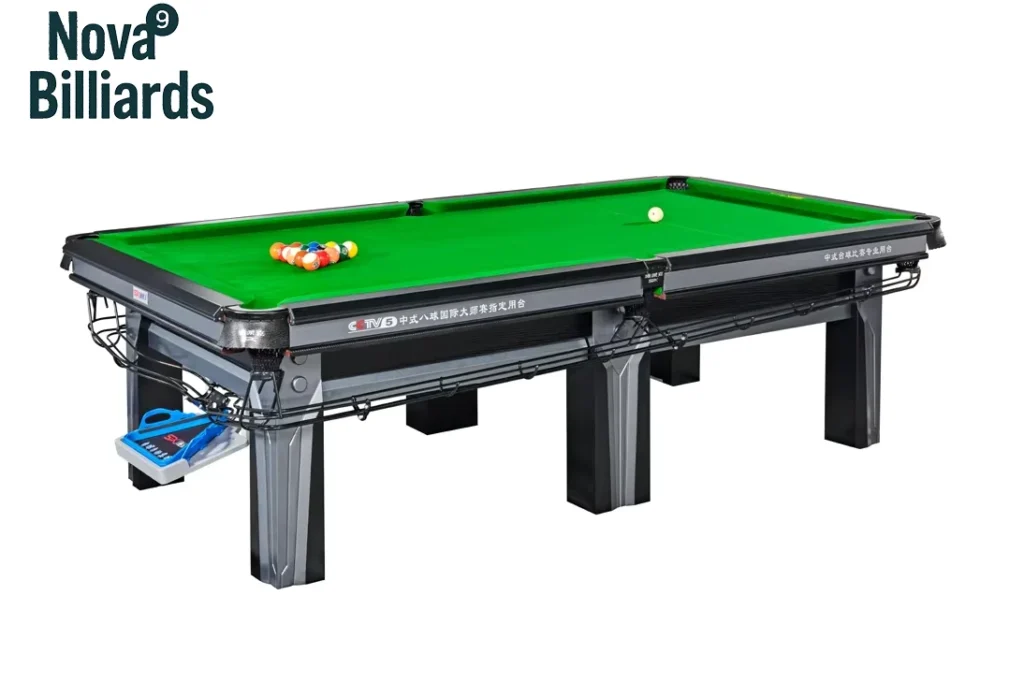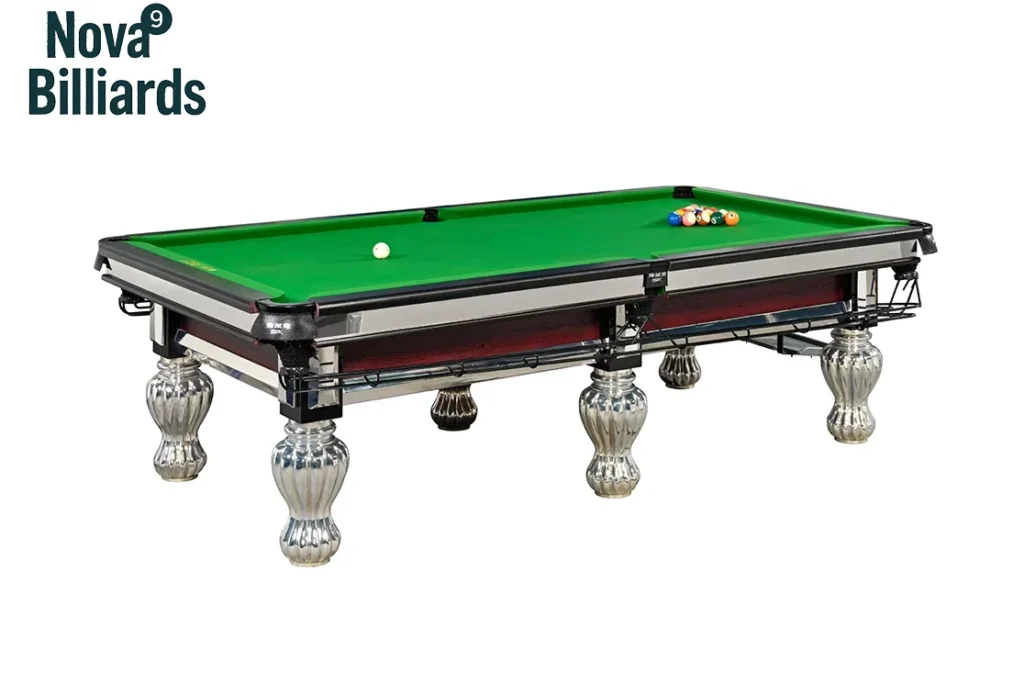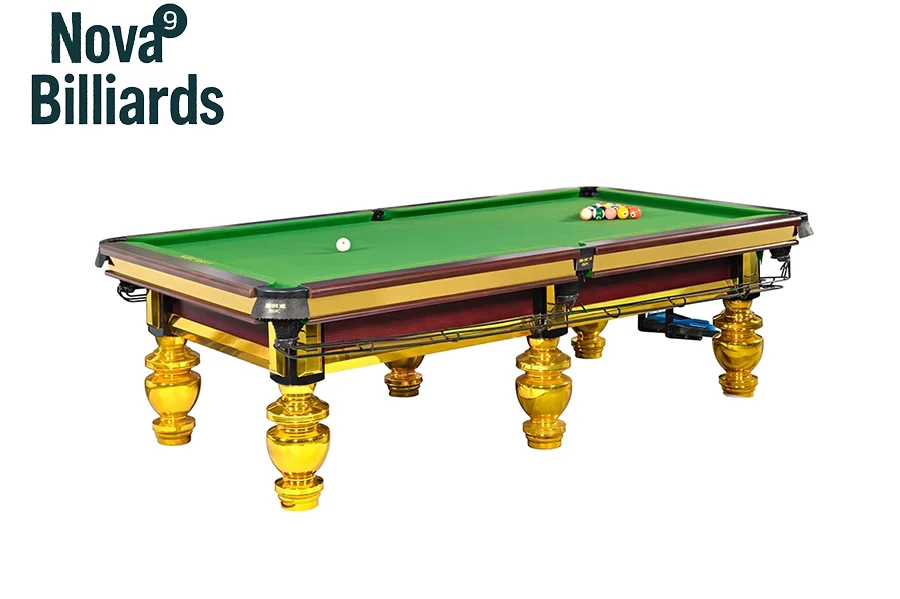
What is the worst nightmare for a new pool table buyer?
It isn’t paying a few hundred dollars too much. It’s getting your beautiful new table delivered, assembled in your game room, and realizing—too late—that you can’t take a shot without your cue stick banging against the wall.
If you have been searching for the “standard size for a pool table,” you have probably noticed that the answers are confusing. Some websites insist that 8-foot is the only standard. Others claim that anything less than 9-foot isn’t a “real” table.
So, who is right?
The honest answer is: There is no single standard size. There are actually three common standards, and the right choice depends entirely on how you plan to use it (and how much space you have).
In this guide, we will cut through the confusion. We’ll break down the specific pool table dimensions for the three main categories—Bar, Home, and Tournament—and explain the critical difference between “playing surface” and “overall size.”
Most importantly, we’ve included a detailed Room Size Chart below to help you measure your space correctly before you spend a dime.
What is the Standard Size for a Pool Table?
If you are looking for a quick answer, there isn’t just one. There are three distinct “standard” sizes used in the billiards industry today, each serving a different purpose.
Here is the breakdown of the three main categories:
| Table Size | Common Name | Playing Surface Dimensions | Best For |
|---|---|---|---|
| 7-Foot | Bar Box / Pub Size | 39″ x 78″ (3.5’ x 7’) | Bars, coin-operated play, and smaller rooms. |
| 8-Foot | Home Standard | 44″ x 88″ (4’ x 8’) | Most residential homes.The perfect balance of fun and skill. |
| 9-Foot | Tournament / Pro | 50″ x 100″ (4.5’ x 9’) | Professional tournaments (WPA) and large game rooms. |
The Verdict: For most homeowners in the United States, the 8-foot table is considered the true standard. It provides a challenging game without requiring the massive footprint of a professional tournament table.
However, before you commit to the 8-footer, you need to understand exactly what you are buying—because size isn’t just about the table; it’s about the room.
Breaking Down the 3 Common Sizes
Knowing the general categories is a good start, but let’s look closer at the pros and cons of each size to see which one fits your playing style.
1. The 7-Foot “Bar Box” (39″ x 78″)
If you have ever played pool in a local pub or bar, you were likely playing on a 7-foot table. These are often referred to as “Bar Boxes.”
- The Experience: Because the playing surface is smaller, the balls tend to cluster together more often. This makes the game less about long-range shooting accuracy and more about strategy and breaking up clusters.
- Best For: Casual players, children, or multi-purpose rooms where space is tight. It provides a fun, fast-paced game that doesn’t feel overwhelming.
2. The 8-Foot “Home Standard” (44″ x 88″)
This is the gold standard for residential game rooms. An 8-foot table offers enough surface area to practice genuine cue ball control and bank shots, making it a significant upgrade from a bar table.
⚠️ Expert Warning: The “Pro 8” Trap Here is a detail most guides won’t tell you: Not all 8-foot tables are the same size.
- Standard 8-Foot: The playing surface is 44″ x 88″. This is the most common size for home furniture tables.
- Pro 8-Foot (Oversized 8): The playing surface is 46″ x 92″. This size is often found on high-end commercial tables (like Diamond or Brunswick Gold Crown) used in serious pool halls.
Why does this matter? The “Pro 8” is 4 inches longer. If your room is borderline on space, mistakenly buying a Pro 8 could mean hitting the wall. Always check the specific playing surface dimensions before buying.
3. The 9-Foot “Tournament Regulation” (50″ x 100″)
This is the size you see on TV during professional WPA (World Pool-Billiard Association) tournaments.
- The Experience: The 9-foot table is a beast. The extra length makes potting balls significantly harder, requiring precise stroke mechanics.
- Best For: Serious enthusiasts, aspiring professionals, and luxury homes with massive game rooms. If you aren’t training for a league, a 9-footer can sometimes feel frustratingly difficult for casual guests.
Playing Surface vs. Overall Dimensions: Don’t Get Fooled
Here is a common scenario: A homeowner reads that a standard table is 4 feet by 8 feet. They measure a 4’ x 8’ rectangle on their floor, see that it fits, and hit the “Buy” button.
This is a huge mistake.
Why? Because “4’ x 8’” usually refers only to the Playing Surface, not the entire table. If you don’t account for the rails (cushions) and the cabinet, you might end up with a table that literally doesn’t fit in your designated spot.
To measure like a pro, you need to distinguish between these two numbers:
- Playing Surface (The Inner Dimensions): This is the area where the ball actually rolls—measured from the tip of one cushion bumper to the opposite one.
- Overall Dimensions (The Outer Footprint): This includes the wooden rails, the pockets, and the cabinet.
The Rule of Thumb: Always add approximately 10 to 15 inches to both the length and width of the playing surface to get the actual footprint of the table.
For example, a standard “8-foot” table (44″ x 88″ playing surface) usually has a total physical footprint closer to 54″ x 98″. If you have a tight niche or a structural pillar, those extra inches make all the difference.
Pool Table Room Size Guide: Will It Fit?
Now for the million-dollar question: Does your room have enough space?
Many people make the mistake of measuring just enough space for the table itself. But you don’t stand on the table; you stand around it. You need to account for the “cueing area”—the space required to pull your cue stick back for a shot without hitting the wall.
The Golden Formula:
Room Length = Table Length + (Cue Length x 2)Room Width = Table Width + (Cue Length x 2)
Why times two? Because you need to be able to shoot from both sides of the table.
Minimum Room Dimensions Chart
To make it easy, we have done the math for you. The chart below shows the minimum room size required for the most common table sizes, using a standard 58-inch cue.
| Table Size | Playing Surface | Minimum Room Size (Standard 58″ Cue) |
|---|---|---|
| 7-Foot (Bar Box) | 39″ x 78″ | 13’ x 16’ 2″(3.9m x 4.9m) |
| 8-Foot (Standard) | 44″ x 88″ | 13’ 6″ x 17’(4.1m x 5.2m) |
| Pro 8-Foot | 46″ x 92″ | 13’ 10″ x 17’ 6″(4.2m x 5.3m) |
| 9-Foot (Tournament) | 50″ x 100″ | 14’ 6″ x 18’ 4″(4.4m x 5.6m) |
(Note: These dimensions assume a completely clear space. If you have pillars or furniture, you might need to adjust.)
Does your room look a little too small based on these numbers? Don’t panic. You don’t necessarily need to knock down a wall. There is a simple “cheat code” that can save you space, which we will cover next.
Room Too Small? The “Short Cue” Secret
Did you look at the chart above and realize your room is just a few inches too narrow? Don’t walk away just yet.
You don’t need to knock down a wall to fit a pool table. You just need the right equipment.
The standard measurements assume you are using a standard 58-inch cue for every single shot. But in reality, there is a simple workaround for tight spaces: The Short Cue (often called a “trouble shooter”).
How Short Cues Save Space
By switching to a 52-inch cue, you instantly save 6 inches of required clearance on each side. That reduces the total room width needed by a full 1 foot.
Here is how the minimum room size changes when you use a 52-inch cue:
| Table Size | Minimum Room Size (With52″ Cue) | Space Saved |
|---|---|---|
| 7-Foot | 12’ x 15’ 2″ | ~1 Foot (Width & Length) |
| 8-Foot | 12’ 6″ x 16’ | ~1 Foot (Width & Length) |
| 9-Foot | 13’ 6″ x 17’ 4″ | ~1 Foot (Width & Length) |
“But won’t a short cue feel weird?”
This is a common fear. Many people imagine those cheap, weightless sticks you find in dive bars.
However, high-quality weighted short cues are balanced to feel just like a standard cue—they are just shorter. Most casual players won’t even notice the difference. You can keep a standard 58-inch cue for breaking and general play, and simply switch to the 52-inch cue only when the cue ball lands near a wall.
Pro Tip: If you have a structural pillar or a specific tight corner, you can go even shorter with a 48-inch or 42-inch cue for those specific “trouble shots.”
7ft vs. 8ft Pool Table: Which Should You Buy?
If your room is large enough to fit an 8-foot table, should you automatically get one? Or is a 7-foot table actually more fun?
This is the most common debate for buyers. Here is how to decide based on your lifestyle, not just your floor plan.
Choose the 7-Foot “Bar Box” If…
- You Love the “Bar” Style of Play: If you grew up playing in pubs or coin-operated venues, a 7-foot table will feel right at home. The smaller surface means balls cluster together more, requiring you to play shorter, punchier shots.
- You Have Kids or Beginners: The shorter distance between pockets makes it slightly easier for children to sink balls, which keeps the game fun and encouraging for the whole family.
- Your Room is Multi-Purpose: If your game room also doubles as a home theater or a living room, the smaller footprint of a 7-footer makes the room feel less dominated by the furniture.
Choose the 8-Foot “Home Standard” If…
- You Want “Room to Breathe”: On an 8-foot table, the balls spread out more. This reduces clustering and allows for more strategic, open play. It is generally considered a “fairer” test of skill.
- You Play in a League (APA/BCA): Many amateur leagues play on 8-foot tables. If you are buying a table to practice for competition, you want your home equipment to match what you play on elsewhere.
- You Care About Resale Value: Since the 8-foot size is the standard for US homes, it is much easier to sell on the second-hand market later. A 7-foot table can be harder to resell because many buyers view it as “too small.”
The Bottom Line: If you have the space for an 8-foot table, get the 8-foot table. It offers the best long-term value and playing experience. Only choose the 7-foot option if your room dimensions physically demand it or if you specifically prefer the faster, “bar-style” game.
Frequently Asked Questions
To wrap things up, here are answers to the most common questions we hear from customers about pool table sizing.
Q: What exactly is a “Regulation Size” pool table?
A: Technically, “regulation size” refers to any table where the length is exactly twice the width (a 2:1 ratio). This means 7-foot, 8-foot, and 9-foot tables can all be “regulation.” However, when people say “regulation” in a casual conversation, they are usually referring to the 4.5’ x 9’ tournament table.
Q: How far should a pool table be from the wall?
A: Ideally, you want 5 feet (60 inches) of clearance around every side of the playing surface. This allows you to use a standard 58-inch cue comfortably. If you have less than 5 feet, you will need a shorter cue for shots near the rail.
Q: Can I put a pool table on a rug or carpet?
A: Yes, absolutely. In fact, a rug can help dampen the sound of the balls. However, keep in mind that the weight of the table (often 600-1000 lbs) will compress the carpet over time. You may need to re-level the table a few weeks after installation once it has “settled” into the fibers.
Conclusion: Measure Twice, Buy Once
Finding the right size for a pool table doesn’t have to be a guessing game. It comes down to simple math: Table Size + Cue Length.
Here is your final checklist before you order:
- Measure your room’s clear floor space (ignoring furniture you can move).
- Decide on your goal: Fun family games (7-foot) or serious skill building (8-foot).
- Check for obstacles: If you have a pillar or tight wall, add a 52-inch short cue to your cart immediately.
Don’t let space anxiety stop you from building the game room of your dreams. As long as you have the clearance, the fun will follow.
Ready to find your perfect match?